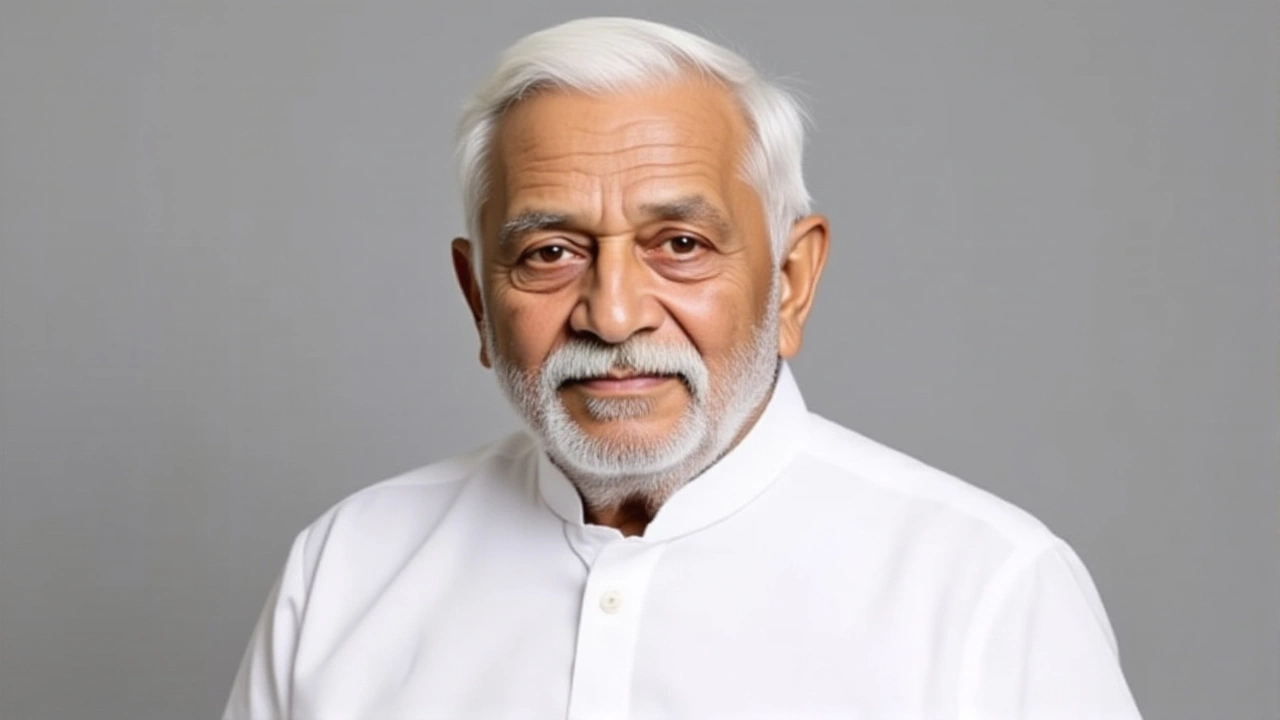
Delhi politics has lost one of its founding pillars. Vijay Kumar Malhotra, former Member of Parliament and first president of the Delhi BJP, passed away on Tuesday morning at the age of 94. The veteran leader died at All India Institute of Medical Sciences (AIIMS) in New Delhi, after a brief hospitalization that left his party colleagues and political rivals alike reflecting on a career that spanned decades.
Here’s the thing about Malhotra: he wasn’t just another face in the crowd. He was there from the beginning, helping build the organizational structure of what is now India’s ruling party. His death marks the end of an era for the Bharatiya Janata Party in the national capital.
A Career Defined by Electoral Clout
To understand why his passing resonates so deeply, you have to look at the ballot box. Malhotra wasn’t a backroom operator who stayed out of the spotlight. He was a five-time Member of Parliament and a two-time Member of the Legislative Assembly (MLA) from Delhi. That kind of electoral durability is rare.
His most famous victory? Beating Manmohan Singh, former Prime Minister of India. In the 1999 Lok Sabha elections, Malhotra defeated the future PM by a significant margin from the South Delhi constituency. It was a shocker at the time, signaling the rising tide of the BJP in the capital against the entrenched Congress machine.
But don’t let the 1999 win obscure his consistency. He also won seats in 1989 and 2004. In fact, during the 2004 general election—a year when the BJP suffered a nationwide setback—Malhotra was the only BJP candidate from Delhi to secure a Lok Sabha seat. That speaks volumes about his personal connect with voters in South Delhi.
Building the BJP Foundation
Before he was winning elections, he was building the party. Born on December 3, 1931, in Lahore (now in Pakistan), Malhotra migrated to India and eventually found his political home in the Bharatiya Jana Sangh, the ideological predecessor to the BJP.
The party didn’t mince words in its official statement following his death. They described his life as "an example of simplicity and public service," highlighting his extensive work in expanding the Jana Sangh across Delhi. He later became the first president of the Delhi unit of the BJP, laying the groundwork for the party’s current dominance in the region.
It’s worth noting that this isn’t just nostalgia. The infrastructure he helped build is still standing. Just the day before his death, Narendra Modi, Prime Minister of India inaugurated the permanent office of the Delhi BJP on Deen Dayal Upadhyaya Marg. The timing felt symbolic, almost like a handover of legacy.
National Tributes and Local Impact
The reaction to his death was immediate and high-profile. Prime Minister Narendra Modi visited Malhotra’s residence in Delhi to pay his respects and console the family. This personal touch underscored the respect Malhotra commanded within the party hierarchy.
Even the opposition acknowledged his stature. The Delhi government cancelled several scheduled official events to honor his passing. It’s a small gesture, but it shows that his influence transcended party lines in the local political ecosystem.
There’s some confusion in the reports regarding his exact age—some sources say 93, others 94—and the specific date of death varies slightly between news wires and biographical entries (with some citing September 30, 2025). However, the consensus is clear: a giant of Delhi politics is gone.
What Remains of His Legacy?
Malhotra’s career mirrors the rise of modern Indian conservatism. He started in the Jana Sangh, survived the Emergency era, and thrived in the post-1980s democratic landscape. He wasn’t known for flashy rhetoric; he was known for results. Winning against Manmohan Singh in 1999 remains his crown jewel, a testament to his ability to mobilize voters in a traditionally strong Congress bastion.
For the younger generation of politicians in Delhi, Malhotra represents a bridge to the past. A time when party loyalty and ground-level organization mattered more than social media trends. His absence will be felt not just in the corridors of power, but in the grassroots networks he spent a lifetime cultivating.
Frequently Asked Questions
Who was Vijay Kumar Malhotra?
Vijay Kumar Malhotra was a veteran Indian politician and a key figure in the Bharatiya Janata Party (BJP). He served as a five-time Member of Parliament and a two-time MLA from Delhi. Notably, he was the first president of the Delhi BJP unit and played a crucial role in establishing the party's organizational structure in the national capital.
Did Vijay Kumar Malhotra defeat Manmohan Singh?
Yes, in the 1999 Lok Sabha elections, Vijay Kumar Malhotra defeated then-Congress leader and future Prime Minister Manmohan Singh from the South Delhi constituency. This victory was considered a major upset and highlighted the growing strength of the BJP in Delhi during that period.
Where did Vijay Kumar Malhotra pass away?
He passed away at the All India Institute of Medical Sciences (AIIMS) in New Delhi. Reports indicate he was under treatment there for a few days prior to his death on a Tuesday morning, with his age cited as either 93 or 94 years depending on the source.
What was his role in the BJP's history?
Malhotra was instrumental in building the BJP from its roots in the Bharatiya Jana Sangh. As the first president of the Delhi BJP unit, he focused on grassroots expansion and organizational stability. His leadership helped transform the party into a competitive force in Delhi politics, paving the way for future successes.
How did political leaders react to his death?
Prime Minister Narendra Modi visited Malhotra’s home to offer condolences to his family. The Delhi government also cancelled several official events to mark the occasion. The BJP issued a statement praising his simplicity and dedication to public service, acknowledging his foundational role in the party’s history in Delhi.