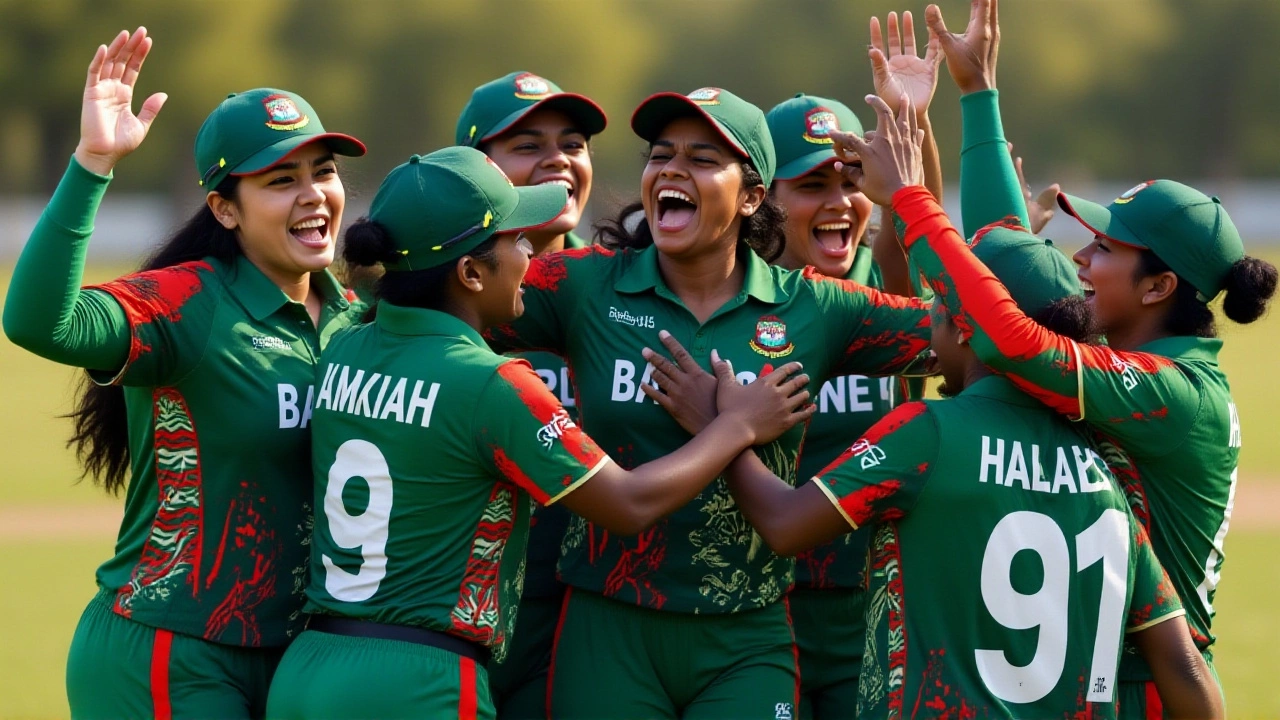
When Bangladesh Women walked out to chase 129 at the R. Premadasa Stadium on October 2, 2025, no one expected the match to end so decisively — or so brutally for Pakistan Women. But within 31.1 overs, the scoreboard read 131 for 3, and the ICC Women's Cricket World Cup 2025 had its first major shocker. The win wasn’t just about runs; it was about dominance, discipline, and a bowling attack that turned the first over into a nightmare.
Disaster in the First Over
It didn’t take long for Pakistan’s hopes to unravel. On the very first ball of the match, Marufa Akter, Bangladesh’s fiery pace bowler, clean-bowled Omaima Sohail. The next ball? Same result. Sidra Amin, Pakistan’s other opener, walked out with confidence and left with a golden duck. Two wickets. Zero runs. One over. The crowd in Colombo gasped. The Pakistani bench sat frozen. This wasn’t just bad luck — it was a masterclass in pressure.
What followed was a collapse Pakistan couldn’t recover from. No batter managed to settle. The middle order looked lost against a disciplined, probing Bangladesh attack. The highest score in their innings? Just 23. The team’s total of 129 all out in 38.3 overs wasn’t just low — it was embarrassingly so. And it wasn’t because Bangladesh bowled with extreme pace or spin. It was because they bowled with purpose. Every delivery was a question. Every over, a test.
Haider and Mostary: The Calm in the Storm
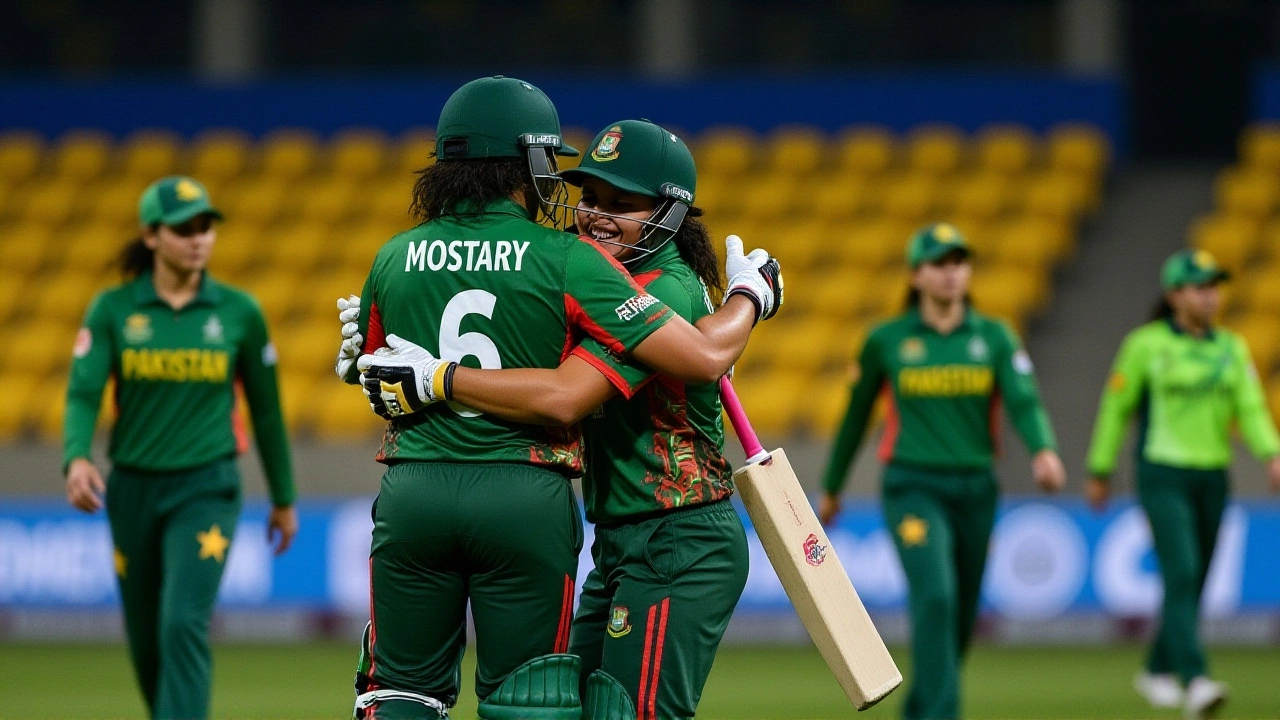
When Rubya Haider stepped out to open the chase, the weight of expectation was on her shoulders. She didn’t flinch. Her 54 not out from 77 balls wasn’t flashy — it was functional, precise, and utterly ruthless. She rotated strike with calmness, punished the loose balls, and never let the momentum slip. When captain Nigar Sultana Joty fell for 19, the pressure could’ve mounted. Instead, Sobhana Mostary walked in and did exactly what she needed to do: support, absorb, and accelerate when the time came.
Together, Haider and Mostary added 72 runs for the fourth wicket — a partnership that turned a chase into a stroll. They didn’t celebrate wildly. Didn’t gestured. Just kept the scoreboard ticking. With 113 balls left, they had already won the game. That’s the kind of composure that wins tournaments.
Why This Matters More Than the Scoreline
Bangladesh women’s cricket has long been the underdog in global tournaments. They’ve had moments — a win here, a fight there — but rarely a statement. This wasn’t just a win. It was a declaration. After years of being labeled "developmental," they’ve shown they can out-bowl, out-think, and out-chase the traditional powers. And they did it against a team that entered the tournament with more name recognition.
Meanwhile, Pakistan’s collapse raises serious questions. Their batting lineup, once seen as a strength, looked brittle under pressure. Two golden ducks in the first over? That’s not a fluke. That’s a systemic issue — lack of mental toughness, poor shot selection, or both. Their bowlers, who did well to restrict Bangladesh’s top order, were let down by a total that was never competitive. Cricket doesn’t reward effort alone. It rewards results. And Pakistan’s effort didn’t yield a single result.
What’s Next for Both Teams?
Bangladesh now faces a tough group stage, with matches against Australia and India looming. But this win gives them belief. Confidence. Momentum. They’ve proven they can win under pressure. The players who stepped up — Haider, Mostary, Akter — are no longer just names on a roster. They’re leaders.
Pakistan, on the other hand, must regroup fast. Their next match against South Africa is a must-win. If they can’t fix their top-order fragility, the tournament could be over before the group stage ends. Their coach, Shagufta Iqbal, will need to make bold decisions — and soon.
Historical Context: A Shift in Power?
This result echoes the 2017 Women’s World Cup, when Bangladesh stunned England in a group-stage thriller. But that win was a surprise. This? This feels like a sign. The gap between the so-called "minnows" and the traditional powers is closing — fast. Teams like Bangladesh, Sri Lanka, and Ireland are no longer just participating. They’re competing. And they’re winning.
The ICC Women’s Cricket World Cup 2025 might be remembered not for the dominance of Australia or England, but for the rise of teams who refused to accept their place in the hierarchy. Bangladesh’s win in Colombo wasn’t just about cricket. It was about dignity.
Frequently Asked Questions
How did Rubya Haider’s innings compare to previous World Cup performances by Bangladeshi batters?
Rubya Haider’s unbeaten 54 was the highest individual score by a Bangladeshi batter in a Women’s World Cup match since 2017, surpassing Jahanara Alam’s 49 against Ireland. More importantly, it was the first fifty by a Bangladesh opener in a World Cup chase — a milestone that underscores her composure under pressure. Her strike rate of 70.1 was also the most efficient among all openers in the tournament’s opening week.
What impact did Marufa Akter’s first-over double strike have on the match outcome?
Akter’s two golden ducks in the first over shattered Pakistan’s momentum before it even began. Statistically, teams that lose both openers for ducks in the first over have won fewer than 8% of matches since 2010. But beyond numbers, it created psychological damage — Pakistan’s batters played cautiously afterward, and their scoring rate dropped to 3.35 runs per over, the lowest in the tournament so far.
Why was Pakistan’s total of 129 considered so low despite Bangladesh’s early wickets?
While Bangladesh’s top order was restricted early, the pitch at R. Premadasa Stadium was always expected to favor chasing. With the ball aging and dew setting in later, teams batting second have won 78% of matches at this venue in the last three years. A total under 130 was never going to be enough — especially against a side with Haider and Mostary in form. Pakistan’s lack of power-hitters made the target feel even smaller.
What does this result mean for Bangladesh’s chances in the tournament?
This win puts Bangladesh in a strong position to qualify for the Super Six stage. They now have momentum, belief, and a proven batting pairing. With Australia and India next, they’ll need to replicate this discipline. But if they can maintain their bowling accuracy and keep Haider in form, they’re no longer just participants — they’re genuine contenders for a semifinal spot.
Has Pakistan ever lost a World Cup opener by such a margin before?
Yes — but never by seven wickets with over 100 balls to spare. Their previous worst opening match loss was in 2013, when they lost to England by six wickets with 27 balls left. This defeat is the most comprehensive in their World Cup history. The margin of 113 balls remaining is the highest ever in a Women’s World Cup match where the chasing side won by more than five wickets.
How did the pitch and conditions influence the match?
The R. Premadasa Stadium pitch offered slight seam movement early, which Akter exploited brilliantly. But as the game progressed, the surface flattened, and the ball became easier to bat on. The evening dew also made fielding tricky for Pakistan, especially in the final overs of their innings. That’s why Bangladesh’s bowlers — who had kept the pressure up early — were so crucial. Without them, the chase would’ve been far more difficult.